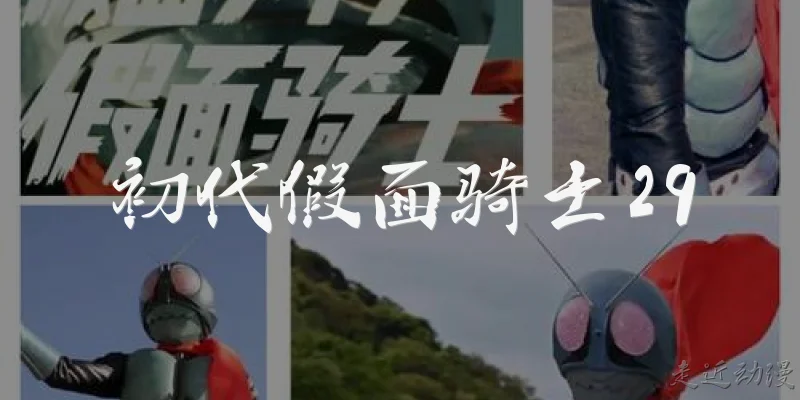
First Generation Kamen Rider 29:What is Kamen Rider 29 in the First Generation era?
Q: What is Kamen Rider 29 in the First Generation era?
A: Kamen Rider 29 does not exist as a main series in the First Generation era. The original First Generation Kamen Rider series, known as the Showa era, includes 15 series from 1971 to 1994, starting with Kamen Rider and ending with Kamen Rider J. The numbering of Kamen Rider series often refers to the entire franchise, not just the First Generation. In the overall franchise, Kamen Rider 29 is Kamen Rider W, which aired from 2009 to 2010 and is part of the Heisei era, not the First Generation. Therefore, within the First Generation, there is no Kamen Rider 29. The term might be a confusion with the overall series count or a specific episode, but as a series, it does not exist in the First Generation.
Q: How many Kamen Rider series are in the First Generation?
A: The First Generation of Kamen Rider, also known as the Showa era, consists of 15 television series and several movies. It began in 1971 with the original Kamen Rider and concluded in 1994 with Kamen Rider J. The series in order are: Kamen Rider, Kamen Rider V3, Kamen Rider X, Kamen Rider Amazon, Kamen Rider Stronger, Kamen Rider (Skyrider), Kamen Rider Super-1, Kamen Rider ZX, Kamen Rider Black, Kamen Rider Black RX, Kamen Rider Shin, Kamen Rider ZO, Kamen Rider J, and the movie Kamen Rider World. Thus, there are 15 series if counting the TV shows, but if including movies, the count varies. The term First Generation is often used to distinguish from the Heisei and Reiwa eras. So, the number 29 does not correspond to the First Generation but to the entire franchise up to Kamen Rider W.
Q: Is Kamen Rider W considered First Generation?
A: No, Kamen Rider W is not considered First Generation. Kamen Rider W, also known as Kamen Rider Double, is the 11th series in the Heisei era and the 29th overall in the Kamen Rider franchise. The First Generation, or Showa era, ended in 1994 with Kamen Rider J. The Heisei era began in 2000 with Kamen Rider Kuuga and continued until 2019. Kamen Rider W aired from 2009 to 2010, making it a Heisei series. The confusion might arise because the term First Generation could refer to the first Kamen Rider, but not to Kamen Rider W. Therefore, Kamen Rider 29 is not part of the First Generation but is a distinct Heisei series with its own storyline and characters. It is important to differentiate between the eras when discussing Kamen Rider series.
Q: What is the 29th Kamen Rider series overall?
A: The 29th Kamen Rider series overall is Kamen Rider W, which aired from 2009 to 2010. It is part of the Heisei era, following Kamen Rider Decade (28th) and preceding Kamen Rider OOO (30th). Kamen Rider W features two protagonists, Shotaro Hidari and Philip, who transform together into Kamen Rider W. The series is known for its detective theme and the use of Gaia Memories. It is not part of the First Generation, which includes only the Showa era series from 1971 to 1994. The numbering of Kamen Rider series can be confusing because it includes TV series, movies, and specials. However, the official count places Kamen Rider W as the 29th main TV series. So, when someone refers to Kamen Rider 29, they are likely talking about Kamen Rider W, not a First Generation entry.
Dialogue about
Common scenarios of "First Generation Kamen Rider 29"
【Alex】 Hey, did you catch the latest episode of Kamen Rider? I'm still buzzing from the 29th episode of the first generation!
【Jamie】 Oh man, you mean the original 1971 series? That episode was intense! Takeshi Hongo really showed his grit.
【Alex】 Exactly! The way he fought against Shocker's latest monster, the Mantis Man, was epic. The choreography was top-notch for its time.
【Jamie】 Yeah, and the story had a lot of heart. I loved how Hayato Ichimonji, Kamen Rider 2, teamed up with him. Their double rider kick is legendary!
【Alex】 For sure. But what struck me was the moral dilemma Hongo faced. He had to choose between saving a civilian and stopping Shocker's plan. That's deep for a kids' show.
【Jamie】 Right? It shows how the series wasn't just about action but also about the hero's humanity. That's why it's a classic.
【Alex】 I also noticed the subtle references to Japanese culture and society at the time. The whole concept of cyborgs reflected the rapid technological advancements and fears.
【Jamie】 Definitely. And the 29th episode, 'The Bloodthirsty Mantis Man,' had some dark tones. The Mantis Man was creepy with those blades.
【Alex】 Totally. The fight scenes were well-shot, especially the motorcycle chase. The Typhoon belt transformation sequence never gets old.
【Jamie】 Haha, I still remember trying to mimic the henshin pose as a kid. Did you have a favorite moment from that episode?
【Alex】 I loved when Hongo used his Rider Kick to finish off the Mantis Man. The explosion was cheesy but satisfying. What about you?
【Jamie】 For me, it was the scene where he saves the little girl. It showed his compassion, which is a core part of being a hero.
【Alex】 Yeah, that was touching. It's interesting how the episode balanced action with emotional moments.
【Jamie】 And let's not forget the iconic soundtrack. The opening theme still gives me chills.
【Alex】 Absolutely. The music by Shunsuke Kikuchi is timeless. Do you think modern Kamen Rider series pay enough homage to the first generation?
【Jamie】 They do, but sometimes it feels like they rely too much on nostalgia. The original had a raw charm that's hard to replicate.
【Alex】 I agree. But it's cool to see Easter eggs and references. Like in Kamen Rider Decade, they revisited the original story.
【Jamie】 True. And the 29th episode is a prime example of why the first series is groundbreaking. It set the template for tokusatsu.
【Alex】 Well, I'm glad we can geek out about this. It's been decades, but the impact is still felt.
【Jamie】 Cheers to that. Let's rewatch the episode soon and maybe marathon the whole first season!